
It All Started With Willow
How One Dog Sparked a Journey of Curiosity, Discovery, and Preservation

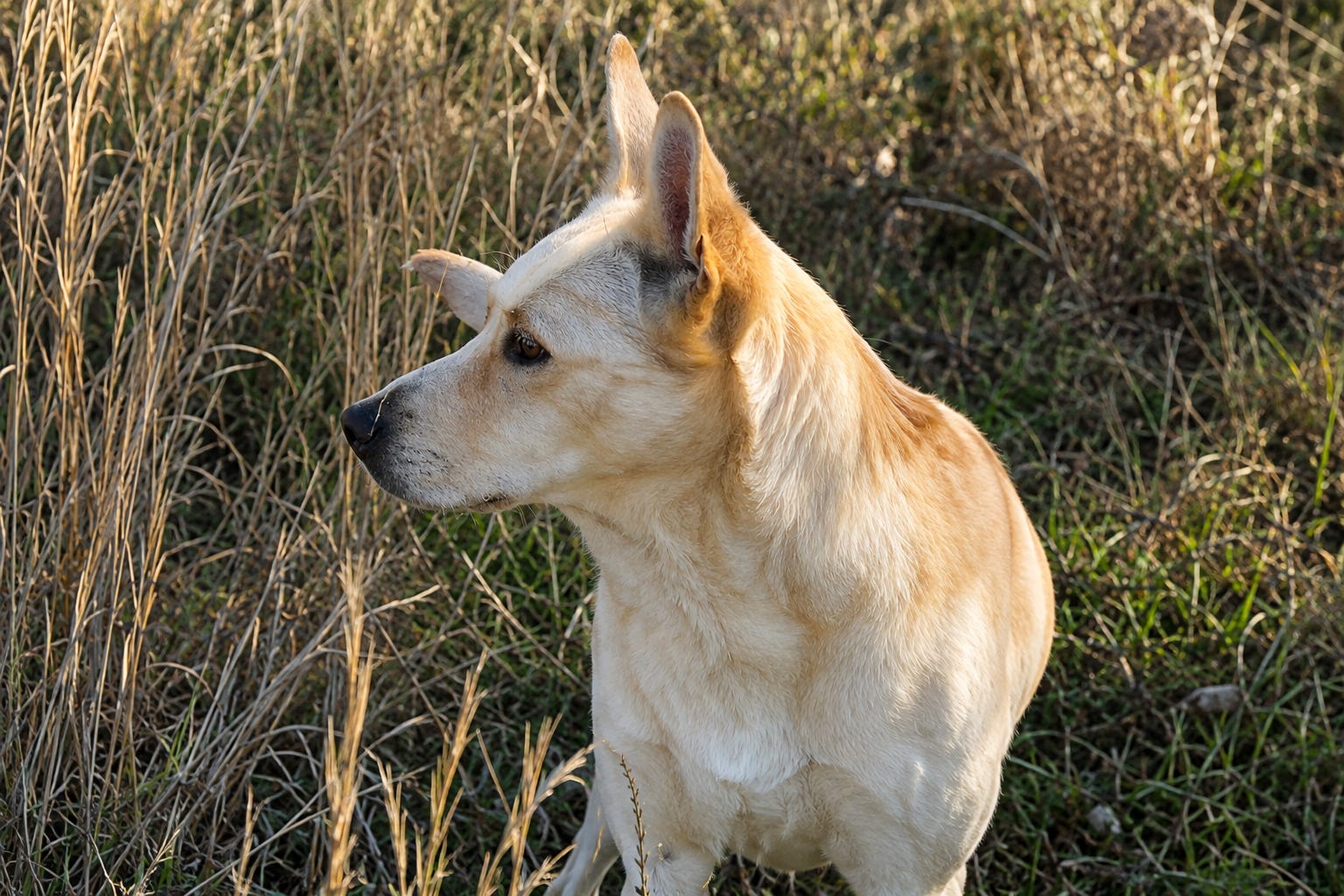
When I retired, I certainly knew nothing about canine genetics.
But somewhere along the way, I became fascinated with Carolina Dogs.
And it all started because we decided we wanted one.
We had heard about Carolina Dogs before Willow ever entered our lives. According to our vet, an earlier dog we got from the SPCA shelter in Sumter had similar characteristics to a Carolina Dog. We had learned just enough about them to be intrigued—and, as I would eventually discover, just enough to realize later that we really didn’t know much at all.
Still, something about these dogs caught our attention, and we began looking for one.
That search introduced us to people who knew considerably more about Carolina Dogs than we did. Through those connections, we eventually learned about a rescued mother and her four tiny puppies. The mother had been living free-range near Latta, in the Peedee region of South Carolina, and had given birth beneath the root ball of a fallen tree in a swampy bog.
One of those puppies eventually came home with us.
We named her Willow Magnolia.
We had found our Carolina Dog.
Or so we thought.
What we had actually found was the beginning of an education.
We Didn’t Know What We Didn’t Know
When we began looking for a Carolina Dog, our knowledge was pretty basic. We knew what they generally looked like. We knew they were sometimes associated with free-ranging dogs of the American Southeast. We knew they had an unusual history.
Beyond that?
Not much.
After Willow came home, curiosity took over.
The more I learned, the more I realized how much there was to learn.
I began reading about the origins of Carolina Dogs and the work of people who had studied free-ranging populations in the Southeast. I learned about their distinctive physical and behavioral characteristics and the environment that helped shape them.
Then came genetics.
Landrace populations.
Breed standards and registries.
The development of the Carolina Dog as a recognized breed.
The increasingly rare free-ranging populations from which the breed emerged.
And eventually I discovered something else I hadn’t known existed—a subtle tension within the Carolina Dog community itself.
On one side is an understandable desire to cultivate, standardize, register, and perpetuate the Carolina Dog as a recognized breed.
On the other is a desire to identify, understand, and preserve the more naturally occurring Southern landrace—the free-ranging dogs that existed long before anyone called them a breed.
Those aren’t necessarily opposing goals. In many ways, they overlap.
But they aren’t always the same goal either.
And suddenly the question wasn’t simply, “What kind of dog is Willow?”
There were much bigger questions.
Curiosity Has a Way of Doing That
One question led to another.
What exactly is a Carolina Dog?
How much can appearance tell us?
What can DNA tell us—and what can’t it tell us?
How did these dogs develop?
How much of what we commonly hear about their history is established science, and how much remains hypothesis?
What happens when a naturally occurring landrace becomes a standardized breed?
And what happens to the remaining free-ranging dogs as habitat disappears, populations become fragmented, and opportunities for interbreeding increase?
I certainly didn’t know the answers.
So I started looking.
And because I’m a writer, eventually I started writing about what I was learning.
Research led me to scientific studies, historical accounts, breeders, Carolina Dog owners, preservation advocates, and people with decades more experience with these dogs than I had.
Sometimes they agreed.
Sometimes they didn’t.
That only made me more curious.
From Owning a Dog to Caring About the Dogs
Somewhere along the way, my perspective changed.
My interest was no longer limited to Willow.
I became interested in the Carolina Dog itself—its past, certainly, but increasingly its future.
How do we preserve these dogs?
What exactly are we trying to preserve?
Is the goal primarily to maintain the recognized breed? Is it to locate and protect remaining free-ranging populations? Can we do both?
And how do we distinguish what we know from what we simply believe—or have repeated often enough that it begins to sound like fact?
Those questions have become a large part of why I continue writing about Carolina Dogs.
I’m not a canine geneticist. I’m not a veterinarian. I didn’t spend my career studying dogs.
I’m a Carolina Dog owner and a writer who became curious. I’m still learning. I expect I always will be. But perhaps that’s also part of what makes this journey so enjoyable.
We started out simply wanting a Carolina Dog.
That search led us to a little ginger puppy born beneath an overturned tree in a South Carolina bog.
Willow came home with us. Curiosity followed.
Research followed curiosity.
Writing followed research.
And eventually, writing led to a growing interest in education and preservation.
We simply went looking for a dog.
We had no idea where it would lead us.


Like you, I had never heard the terms Carolina dogs or landrace. From you, I am learning fascinating insights into both. Thanks, Cork.
Interesting. I saw a documentary on Carolina dogs in ETV a few years ago. I also think I have heard the breed referred to a “dingo”. Either way, I understand they make great companions. Thanks for your writing on this and thee many other subjects in your substance.